LEON NANOscreen

Transforming a benchtop prototype into an R&D nanoencapsulation platform

Our client, LEON, had previously worked with Team Consulting to develop the NANOme®, an award-winning nanoencapsulation system for the aseptic manufacture of personalised medicines and nanoparticle-based therapies. To expand its NANO platform, LEON needed a compatible R&D system for early stage therapy development and testing, providing a straightforward route from research to scalable production, by enabling direct 1:1 transfer into GMP manufacturing using the same core technology.

In just five months, we transformed their benchtop prototype into the NANOscreen®.

LEON NANOscreen

NANOscreen® - a benchtop R&D system for nanoencapsulation

LEON’s proprietary nanoencapsulation technology encapsulates APIs such as DNA and RNA within lipid nanoparticles. This process offers protection to genetic material from degradation, facilitates cellular uptake, and enhances therapeutic efficacy within gene therapy and drug delivery.

As part of its NANO platform, LEON required a new system tailored to the early R&D stage of therapy development. The NANOscreen® needed to use the same core technology as the NANOme®, enabling researchers to develop and test therapies using processes that could be predictably and reliably scaled and transferred to GMP manufacture, without the need for process re-validation.

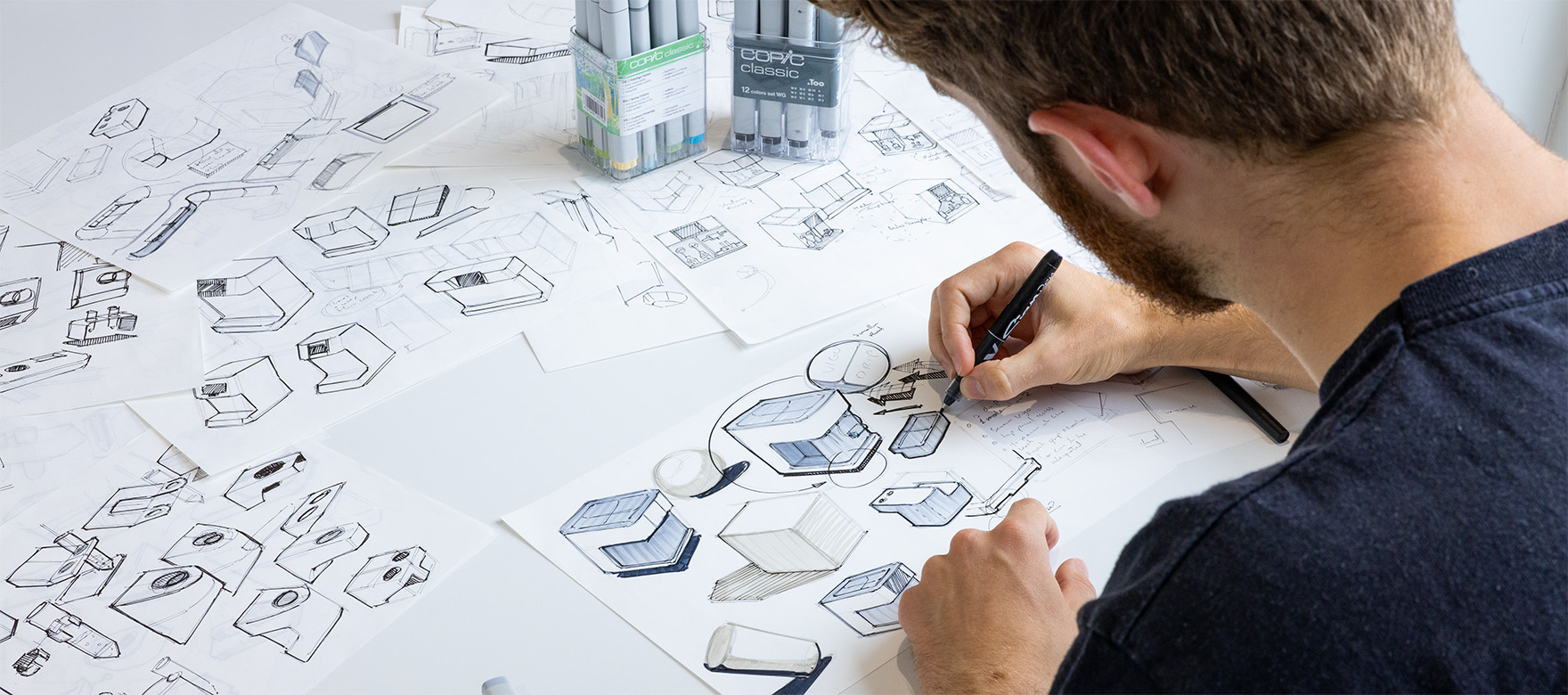
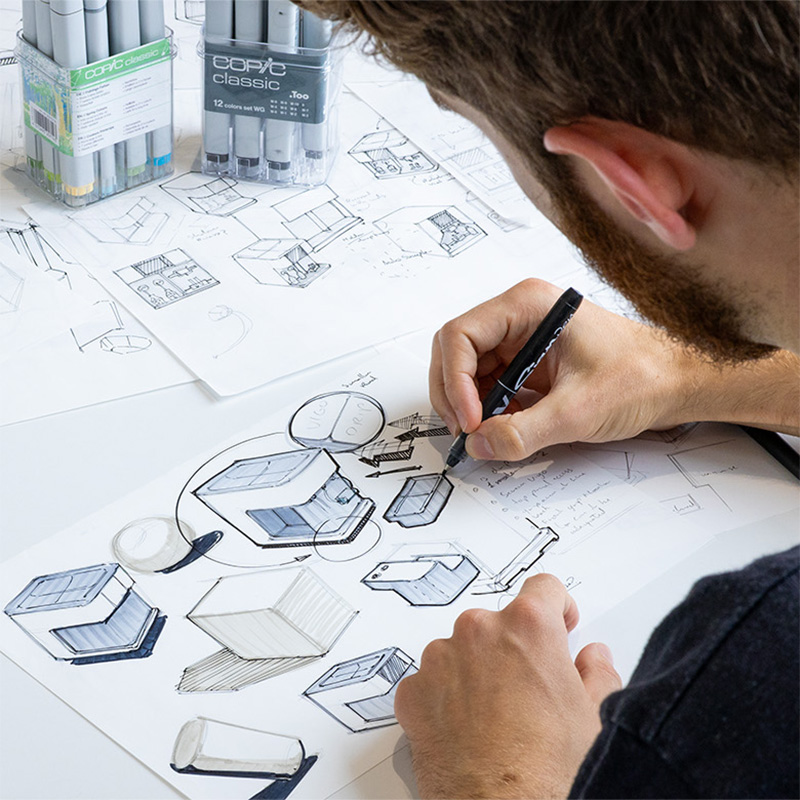
LEON NANOscreen concept sketches

Designing a highly usable product with a simple user workflow

Building on the award-winning user experience of the NANOme®, LEON wanted to design the same ease of use into the NANOscreen®. To achieve this, we began by mapping the user journey to understand each stage of the workflow and identify potential usability challenges. From here, we rapidly developed several low-fidelity concepts, working in parallel across mechanical and industrial design to ensure the final product was both intuitive to use and technically feasible. The final design features an accessible user workflow, helping to reduce training requirements and support efficient operation.

Gloved hand touching device screen

Flexible software development to enable rapid iteration

To meet ambitious timelines, we used off-the-shelf PLCs (programmable logic controllers) and paired them with custom software tailored to the system’s requirements. This approach accelerated development, enabled rapid iteration and provided the flexibility to expand functionality as the project progressed, while maintaining a reliable and practical solution.

The PLC software was developed using an Agile methodology, structured around weekly sprints and a priority-ordered backlog to ensure continuous progress and responsiveness to evolving requirements. A Test-Driven Development (TDD) approach was employed throughout, leveraging unit and integration testing to maintain development momentum ahead of hardware availability, enabling the team to validate functionality and de-risk the project well in advance of physical hardware delivery.

Engineers working on device prototype

Pre-verification testing to ensure reliable performance

Although the system did not require GMP compliance, we applied a rigorous verification approach to ensure it met the Product Requirements Specification (PRS). Our experts carried out a series of risk assessments and verification activities, evaluating both system performance and user safety. This included testing critical safety features such as interlocks, as well as assessing syringe pump behaviour under a range of operating conditions to confirm reliable and predictable performance.

Outcome

From project kick-off to production-ready design, the full development was completed in just five months, with the first functional prototype delivered after only four months. This rapid progression enabled our client to move quickly towards manufacturing, resulting in a successful product launch. The NANOscreen® is now ready to support the next generation of nanoparticle-based therapy development, helping bring new cell and gene therapies to reach the patients that need them.

How can we help you?

Let’s start working together on your next challenge.